


 Government Partnerships
The sun is already burning the dew off the vast, 6,100-square-mile canvas of the Nashik district by the time Dr Saroja Singh reaches her desk. One of the biggest districts in the Indian state of Maharashtra, it is home to a sprawling enterprise of administrative machinery at different levels. As the District Education Officer, Dr. Singh’s jurisdiction is larger than many mid-sized organisations, encompassing over 3,200 government schools, more than 10,500 teachers, and close to 200,000 children. Her days are rarely spent on strategy. She is often busy with myriad responsibilities: teacher transfer requests, legal disputes, state ministry queries, a stream of visitors, and 50 to 80 calls. Her support staff consists of around 240 officers and is 35% vacant. Depending on the urgency of the matters on any particular day, Dr. Singh’s day stretches well beyond 6 pm, to as late as 9 pm.
The ‘missing middle’ in India’s education system
Is Dr. Saroja alone in this struggle? Education systems across South Asia and Sub-Saharan Africa are discovering she is not. The UNESCO International Institute for Educational Planning (IIEP) has a name for her cohort: the ‘Missing Middle,’ the district and block-level professionals who form the crucial but neglected link between policy and classroom (UNESCO IIEP, 2025).
Dr. Singh is one of 6,500 ‘non-teaching’ officials in Maharashtra alone, the district and block officers, cluster coordinators, and academic mentors who form India’s ‘middle’ within the education ecosystem. They are the critical link between policy and the classroom, responsible for translating ambitious reforms like The National Education Policy (NEP) 2020 and Nipun Bharat mission into learning outcomes for 150 million children. Yet their is a distinct absence of professional development. While top administrative officers earn global fellowships, this layer carries significant administrative burden, reducing their potential as instructional leaders significantly. Dr. Singh’s story is not an exception. It is the rule and a global blind spot.
Diagnosing the problem: A system with excessive administration
This problem is compounded by the goals of educational policies and their somewhat vague ambitions. The highest priority of the education system, according to NEP 2020, is to achieve universal foundational literacy and numeracy in primary school by 2025 (NEP 2020, p.8). On the other hand, the World Bank estimates that over 50% of India’s children suffer from “learning poverty,” unable to read simple text by age ten. This point is also highlighted by various domestic surveys, such as ASER, conducted over the years, which show that >40% of students in grade 3 cannot use basic math to solve daily life problems, and this number increases to >60% by grade 8. One may resort to blaming the teachers for this crisis, but a deeper look highlights the role of the missing middle within the whole picture.
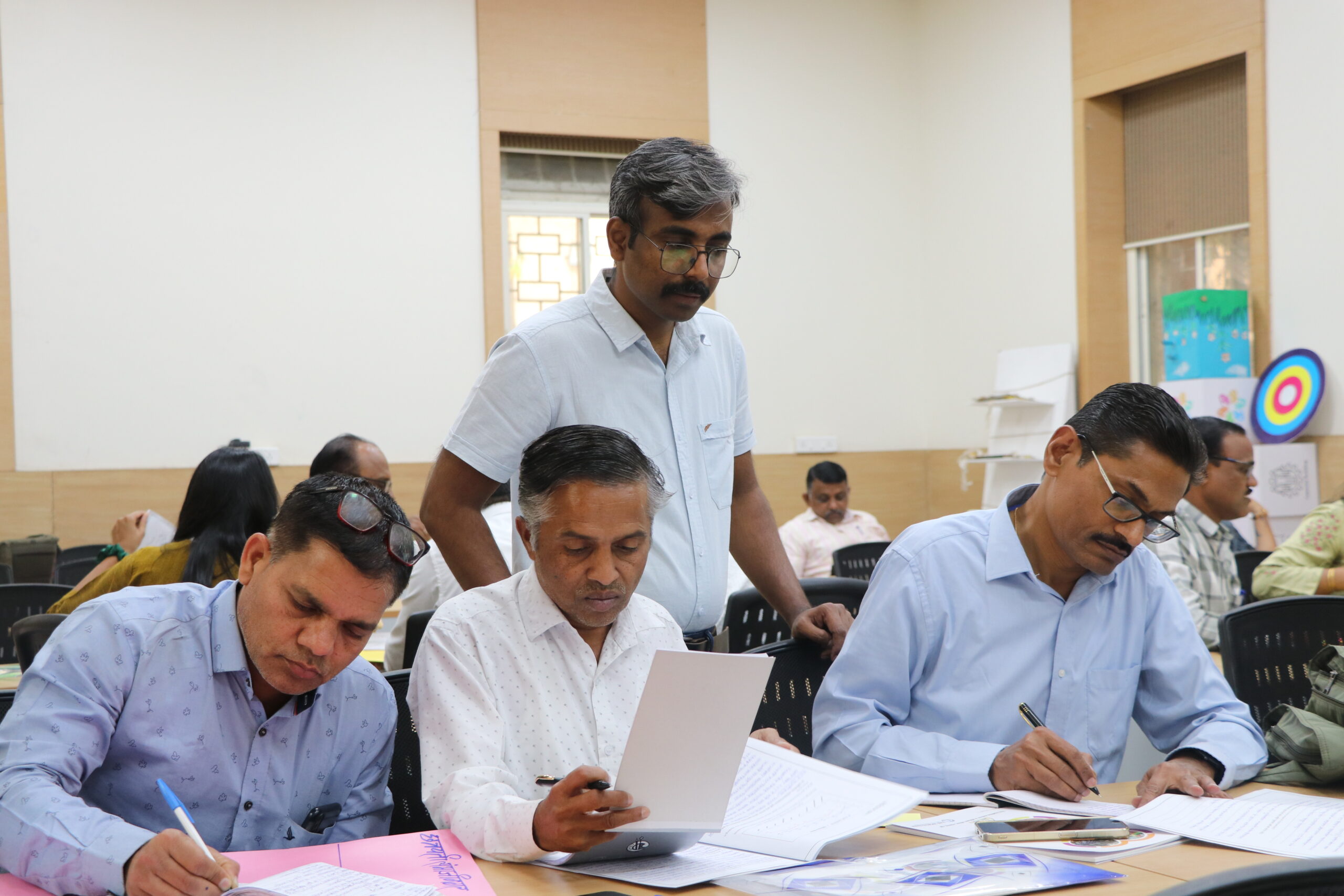
Multiple reports and documents have highlighted the poor learning outcomes, but the governance failures behind those numbers are less often examined. Leadership For Equity (LfE) has spent years diagnosing one critical piece: the capacity of the ‘missing middle.’ A 2019 Training Need Analysis (TNA) of nearly 1,000 officers in Maharashtra revealed that middle management is currently overburdoned in a clerical vacuum. Approximately 70-80% of an officer’s time is consumed by urgent administrative tasks, record-keeping, RTI replies, and fund management, leaving minimal space for instructional leadership (Leadership For Equity [LfE], 2019, p. 16).
Furthermore, the system is operating in a state of severe understaffing. The TNA also reported that only two-thirds of the 7,000+ sanctioned posts were filled, forcing the remaining middle managers to work with only 30-40% of the total required staff. This results in an ‘administrative drain,’ where officers intended to be academic mentors are reduced to clerical helpers, swamped by a constant flow of files and data requests. In recent years, there has been a rising concern among scholars that such officers often perceive themselves as disempowered cogs in a hierarchical administrative culture. They often refer to their own roles and offices as “Post offices,” used simply for doing the bidding of higher authorities and ferrying messages between the top and bottom of the education chain (Aiyar & Bhattacharya, 2016).
A proposed solution: The LEAD Programme
For foundational learning and numeracy reforms to take root, the middle layer must shift its identity from compliance monitors to instructional leaders. To transform these delivery agents into reform architects, LfE developed the LEAD (Leadership Enhancement and Academic Development) programme. LEAD targets the Knowledge, Skills, and Mindsets (KSM) required for effective governance, moving officers away from a compliance-driven inspection model toward a supportive facilitator approach (Leadership For Equity [LfE], 2022). The programme has evolved from traditional in-person workshops into a blended learning model that respects the intense schedules of middle managers. Using the Firki app, officers access self-paced online modules and pre-recorded videos, supplemented by Peer Learning Communities (PLCs). This flexibility is critical; 87% of officers interviewed by LfE expressed a strong desire for these shared learning spaces to solve ground-level problems.
The impact of this work is evident across two major Indian states:
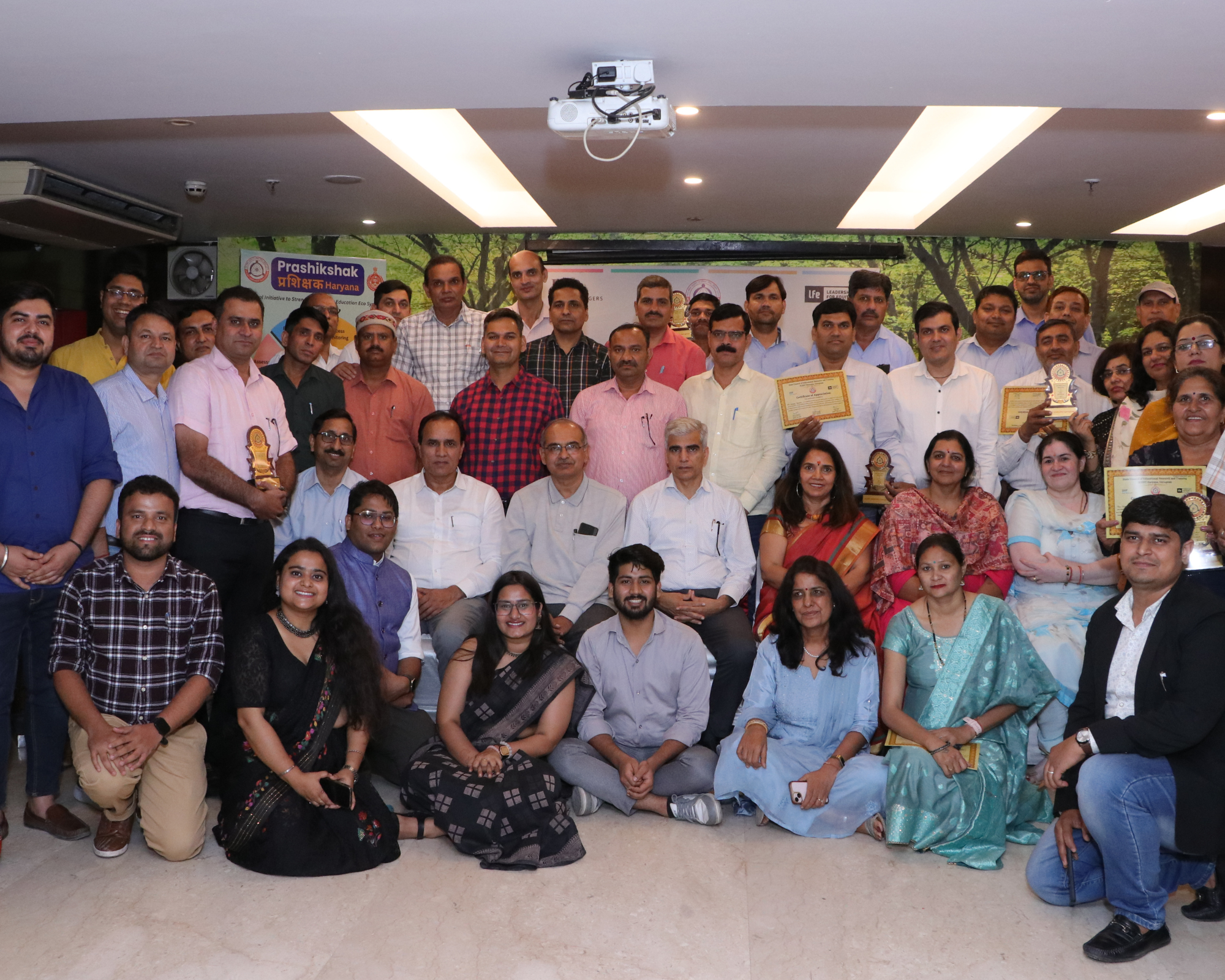
- Maharashtra: Pilots certification rates reached 72% for 21st Century Skills, achieving a Net Promoter Score (NPS) of 8.6. Officers reported a fundamental mindset shift, with one noting,…“[The course] allows me to plan my work accordingly. Now I can allocate my work … [It] Helped me to save time while working. Previously I thought all work I had to do on my own, but now I realise I have to allocate my work with my team for quality work and time saving. The content is useful for my job role.” Officer 16, ETM
- Haryana: The programme achieved massive scale, reaching over 1,700 officers with a near-universal 97% certification rate in consolidated coursework.
Testing for impact: The GSF Impact at Scale Labs programme
Recognising that local success must be backed by rigorous evidence to achieve national scale, LfE was selected as a grantee on the Global Schools Forum (GSF) Impact at Scale Labs Foundational Literacy and Numeracy programme. The Lab programme serves as a critical innovation partner, providing the coaching and framework necessary to test LfE’s core hypothesis: that supporting middle-tier officials to conduct structured classroom observations leads to improved teacher-student interactions and, ultimately, better student learning. The GSF Lab has been instrumental in helping LfE refine its Theory of Change (ToC) and its Monitoring, Evaluation, and Learning (MEL) framework. Through diagnostic workshops and monthly coaching sessions, the Lab supports LfE in implementing standardised tools like the World Bank Teach Primary tool. This tool moves beyond the inconsistent, unstructured observations of the past, allowing observers to provide specific, actionable feedback.
By introducing realistic, time-bound expectations such as four structured observations per month, the Lab helps LfE demonstrate that middle managers can prioritise instructional leadership without compromising their administrative duties. This evidence-gathering phase is vital for securing systemic buy-in, ensuring that LfE’s work can be replicated and institutionalised at a national level.
A global call to action
The challenges of the bureaucratic middle are not unique to India; they are a universal bottleneck in education systems across the Global South. Efforts to capacitate this layer are currently limited to select pockets, necessitating a movement to integrate research, evidence, and practice into the global reform agenda. Global research from the Boston Consulting Group (BCG) confirms that “learning and training opportunities” are the fourth most important factor for workplace satisfaction worldwide. By repositioning middle-tier leaders as catalysts for reform rather than conduits for compliance, we unlock durable, bottom-up change.
Join us at CIES 2026
GSF is facilitating this vital dialogue on the world stage. We invite you to join us at CIES 2026 for the session: ‘Reimagining the middle-tier support system to improve education outcomes at scale in Sub-Saharan Africa and South Asia’. Curated by GSF, this panel will feature Leadership For Equity (LfE) alongside partners Dignitas and PEAS sharing implementation learnings from India, Kenya, Zambia, Ghana, and Uganda. Together, we will explore how to equip our bureaucratic middle to ensure that when our teachers thrive, our children thrive.
With thanks to Sahil Sharma for support producing this article. Sahil Sharma is an Associate at Leadership for Equity, where he focuses on the complex internal processes within government education systems, particularly the tools and methods used to investigate their workings. He holds a master’s degree in Sociology from the University of Hyderabad and is currently based in Vijayawada, India.
References
Aiyar, Y., & Bhattacharya, S. (2016). The post office paradox: A case study of the block level education bureaucracy. Economic and Political Weekly, 51(11), 37–45
Leadership For Equity. (2019). Officers Training Needs Analysis Report 2019. www.leadershipforequity.org/research/officer’s-training-needs-analysis-report-2019
Leadership For Equity. (2022). LEAD rapid impact evaluation: Internal evaluation study to understand applicability of course concepts on processes and teacher programs. www.leadershipforequity.org/research/lead-rapid-impact-evaluation
Ministry of Education. (2020). National Education Policy 2020. Government of India.
Tournier, B., Godwin, K., Cameron, E., & Lugaz, C. (2025). Leveraging the potential of the middle tier to improve education outcomes: The role of a capacity assessment framework. UNESCO International Institute for Educational Planning (IIEP).
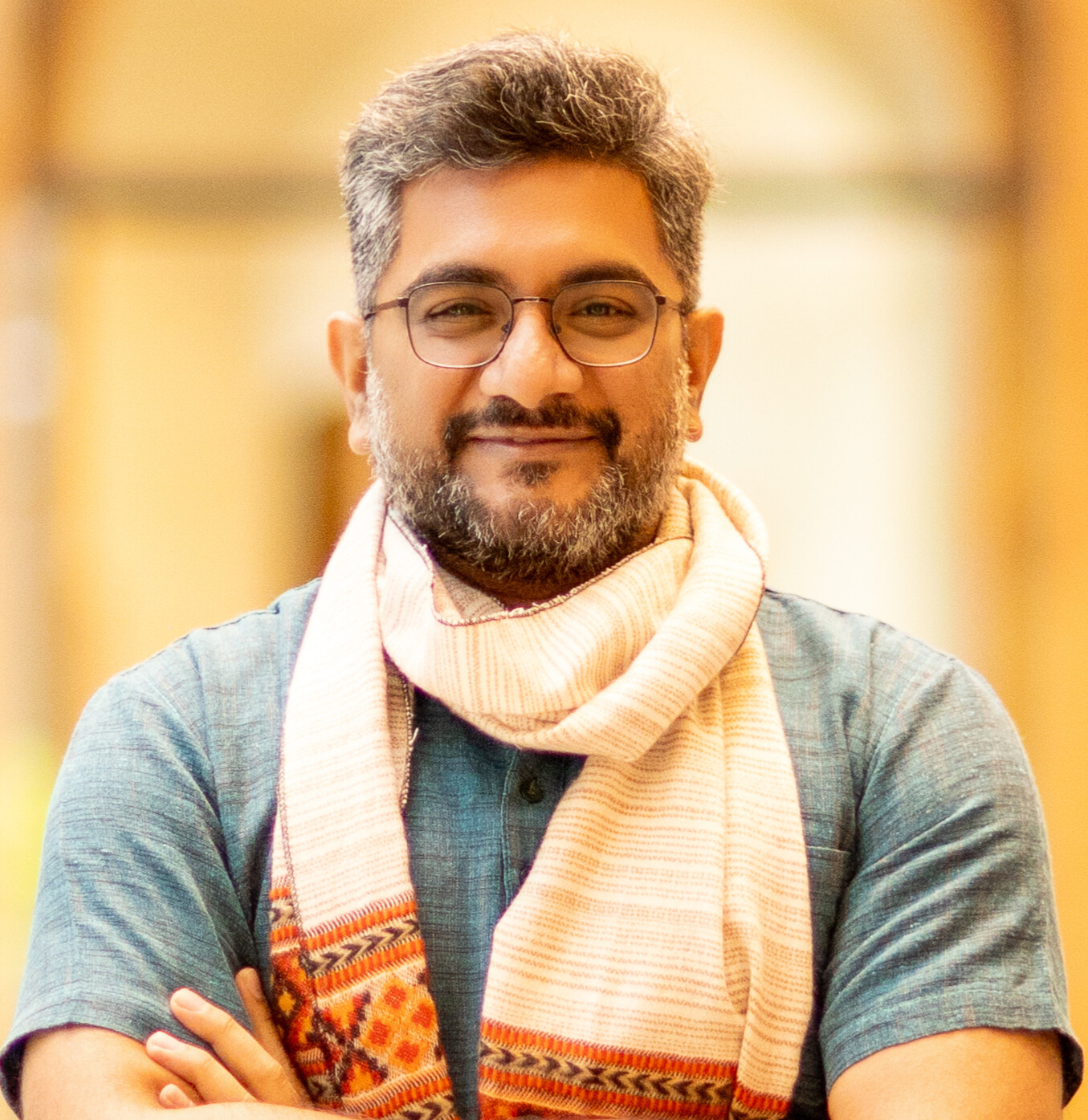
Madhukar Banuri, Founder, Leadership For Equity
Share this article