


 Government Partnerships
Since many of us first gathered in Delhi 1.5 years ago, we’ve collaborated to grow Lighthouse Coalition, a network of government champions in the Global South improving literacy and numeracy. Our pilot links emerging exemplars in Brazil, South Africa, Kenya and India – all lighthouses for the world to learn from. We’d like to share some of what we’ve learned so far, including five key steps to accelerate government reforms: strengthen a local institution, mobilise key decision-makers, go positive instead of negative, run turbo-charging South-South immersion trips, and grow coalitions to sustain policy reforms through political disruptions. Lighthouse shows the Global South has a lot to teach, not only learn.

Relationship-strengthening between former Sobral mayor & Kenya MoE FLN lead.
1. Develop local, long-haul institutions that embed trusted advisors within government.
The best people to create domestic demand are leaders who commit their lives to improve education in their own country. Externally-funded approaches, driven by development agencies, have struggled to effectively address the learning crisis. Although we have countless examples of what interventions ‘work’ (i.e. structured pedagogy), all of these were either at small scale, or implemented by governments and cancelled when political winds or development aid budgets shifted (such as Tusome in Kenya, 2015-2022). We have few cases where governments in the Global South themselves decided to take action on foundational literacy and numeracy, and implemented the entire package necessary to improve learning outcomes at massive scale over many years (political will and leadership, teacher guides, student workbooks, assessments, coaches to help teachers improve). Two examples are the ABC scale-up of the Sobral/Ceará model to 18 of Brazil’s 26 states, and Indian states through the national NIPUN Bharat mission.
Brazil and India show us that in any country, it’s important to invest in local organisations that are deeply embedded in long-term government work. In both cases, local political and bureaucratic leaders drove change, backed by local non-state technical experts and funders. For example, Central Square Foundation (CSF) has local technical advisors embedded within 11 state reform teams. Lemann Foundation seeds policy coalitions in Brazil, such as the Literacy Alliance. We must fund organisations to hire full-time senior government relations staff with decade+ time frames, not just send consultants to help governments with short-term projects. Country-based technical advisors in institutions are essential to effectively grow the trusted government relationships and political landscape knowledge that sustains reforms that last.
(Lighthouse Coalition strengthens government relations teams and coalition managers in Kenya, South Africa and India. For example, we enabled CSF’s CEO and Brazilian coalition experts to share tactics with South African technical advisors in Cape Town, and we sent Language & Learning Foundation’s numeracy expert to advise Mizizi’s numeracy reform coalition in Nairobi. Backend orchestrators use our community of practice as a safe space to talk about the ‘messy middle’ of government partnerships.)
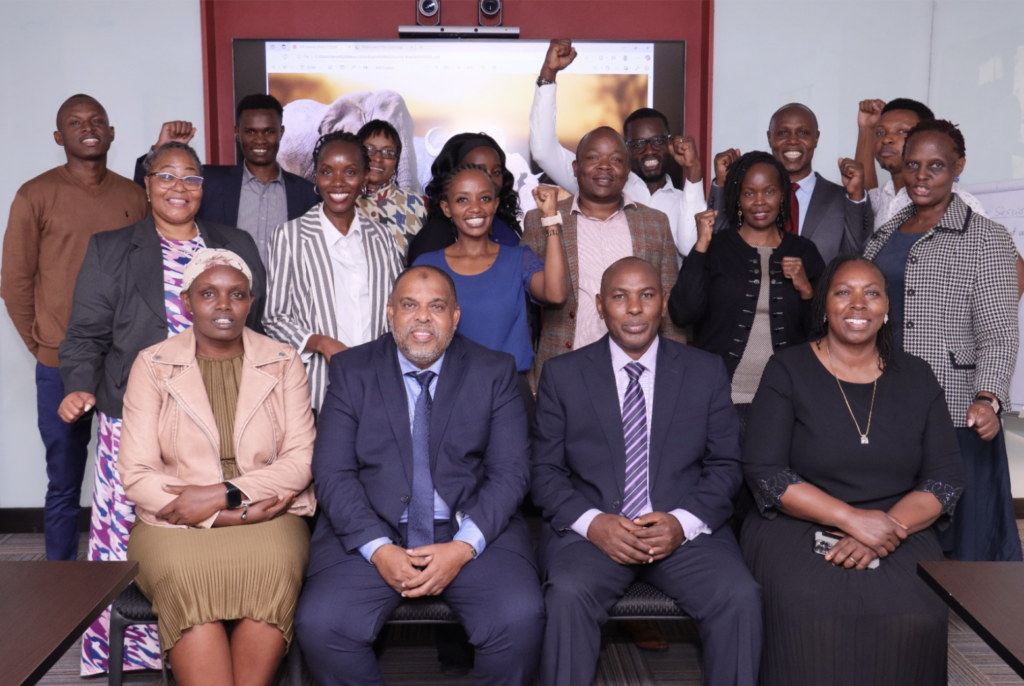
Pre-trip onboarding with Kenya numeracy coalition.
2. Map a system’s key structures, incentives & people – then cultivate emotional buy-in.
A research brief, academic journal article, MOU or Minister with specific technical knowledge are not enough. To strengthen a government system, we have to motivate people. System reform is not only a technical challenge; it is also a political and human behavior change challenge. The answers lie in relationship-based sales, marketing, psychology, mindset shifts, communications, influencing, organising, movement-building and domestic coalition-building.
The first step for local technical advisors is to understand how their system moves and identify the people who pull the levers, particularly at the middle-tier. Map out:
- When windows of opportunity open and close – elections, budget cycles, transfers, agendas of political leaders, or annual KPI’s of bureaucrats.
- Institutions and stakeholders with power over those windows – government agencies, unions, school leader associations, national or sub-national layers.
- Decision-makers – formal title-holders and informal influencers or advisors, who shape key system factors and institutions.
Next is to grow these people into champions and allies; cultivate and strengthen relationships through 1-1’s, briefings with their team, tailored evidence and tools, and in-country events showcasing their work to the media.
Too often, non-profits and funders engage either the top levels of Ministers/Presidents/PM’s (EWF, ADEA, UNGA, African Union) or the frontline level of school leaders and teachers (Global School Leaders, Global Teacher Prize). These platforms help keep foundational learning high on political agendas, track/monitor commitments at the school level, and create healthy peer competition; however, country-level large-scale change comes from domestic government leaders. We need more channels to convene middle-tier leaders INSIDE government, because they are key decision-makers over policies to improve learning outcomes – but are under-valued as potential reform champions.
(This is why Lighthouse activates politically appointed state secretaries, sub-national leaders across states, provinces, counties, districts or municipalities, and lifelong civil servants and technical directors of national agencies (such as Martin Kungania, focal point for foundational learning at Kenya’s Ministry of Education).)
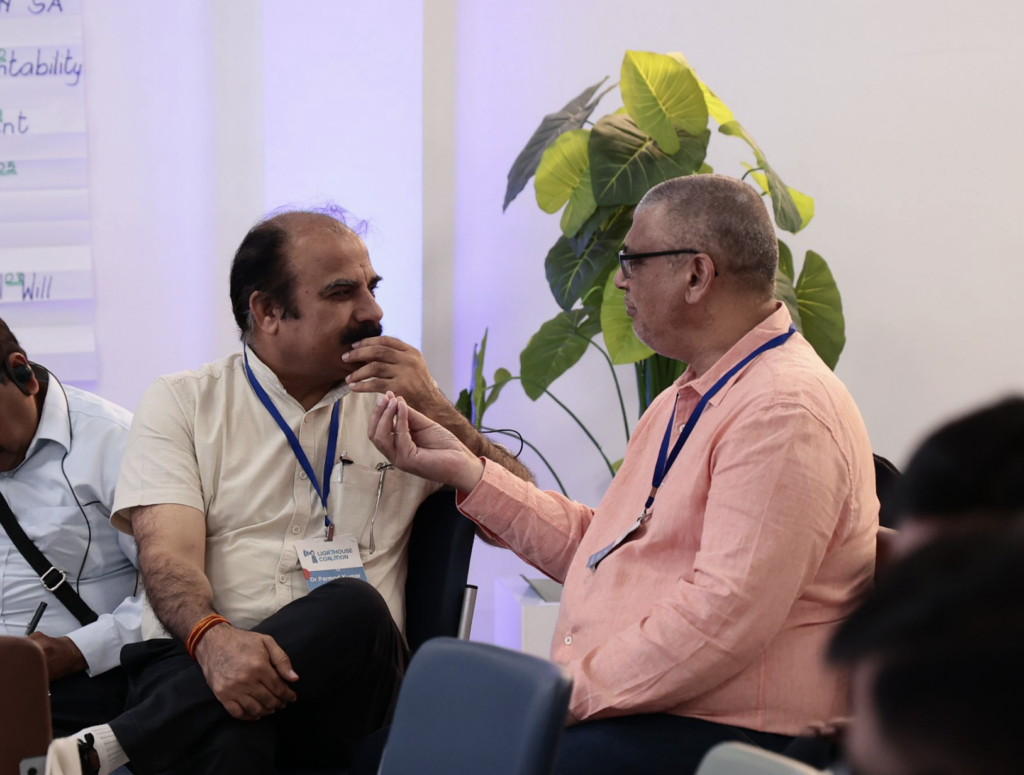
Indian state leader exchanging tactics with South African provincial leader.
3. Build on what motivates people: peers & positive framing.
Global education actors tend to focus too much on what governments do wrong, and not enough on what they do right. Accountability is important; for example, India’s ASER and South Africa’s Reading Panel 2030 grew momentum for government action. But assessments that compare outcomes for many countries and place Global South countries at the bottom, make government leaders feel de-moralised and cynical. Behavioral science demonstrates three alternatives:
- Peer role models & solvability: As Marian Wright Edelman says, “You can’t be what you can’t see.” People won’t believe something is possible until they watch and experience it themselves (what Albert Bandura calls observational learning). As innovation diffusion expert Atul Gawande explains, peer behavior can inspire more behavior change than facts or financial incentives. Introducing government leaders to peers who successfully improved learning outcomes, shows them reform is possible.
- Positive Reinforcement: As Goller and Späth explain, positive feedback, such as feeling rewarded through public praise and recognition, improves performance and motivates people to change, while negative feedback does not affect performance. (This is why we showcase good work by governments through tools like an immersion trip to India or a video about South Africa’s movement to tackle literacy; both lift reforms off a briefing page and into hearts and minds.)
- Self-efficacy & hope: Growing optimism is important. While fear and negative consequences can motivate short-term action, hope motivates more sustained action. As one expert notes, “When hope spreads through a group or organisation, it fosters a sense of shared purpose. People become more resilient and willing to tackle difficult challenges because they feel like they’re in it together, sharing in the journey toward a better future.” Systems change theorist Otto Scharmer documents how guiding a group to co-create narratives of potential futures can spur them to actually take action to bring forth those futures. For government leaders to successfully guide reforms, they need self-efficacy, the belief their actions can achieve that goal. (This is why we facilitate government leaders to co-create a hopeful vision for the change they can create together – in Kenya (country-wide), three Indian states, and four South African provinces.)
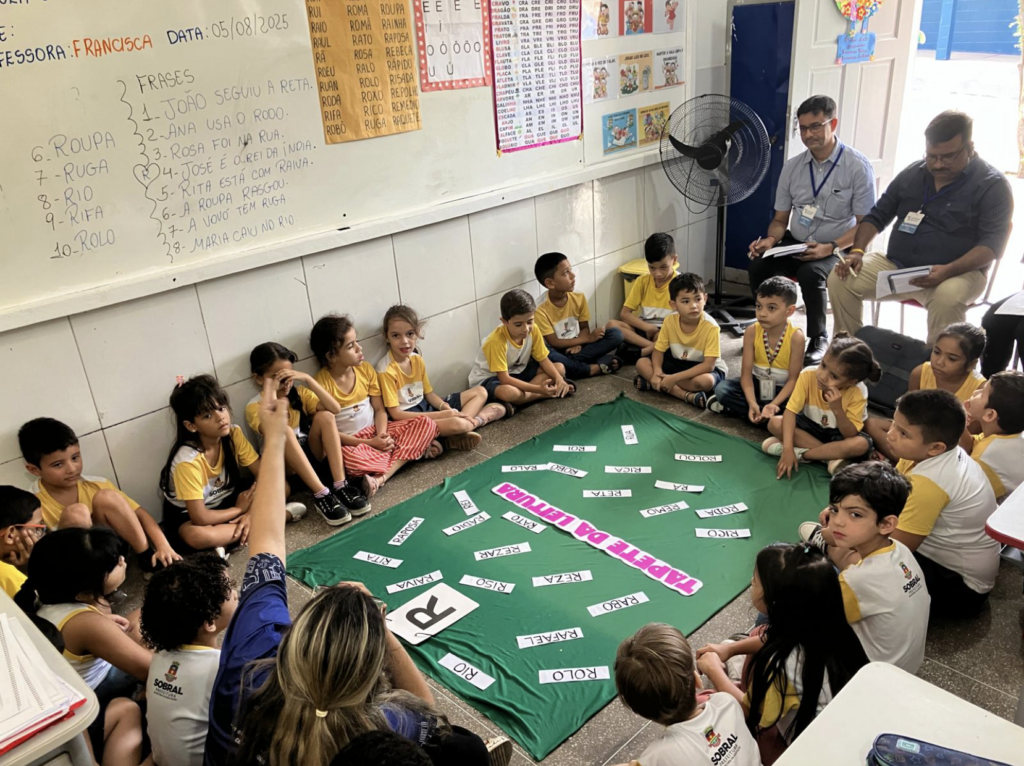
Uttar Pradesh state leaders observing a Brazilian literacy lesson.
4. Take government leaders on immersion trips to experience the goal, trust each other & launch collective action.
Too often, government leaders from the Global South are told that to learn about education reform, they should fly to Finland, the UK or Singapore. But we’ve found that it’s more powerful to bring government leaders to cases that feel more similar to their own, like Brazil or India. South-South exchange shows them that despite budget constraints, huge populations, decentralised bureaucracies and political challenges, they CAN succeed in system reform.
Group immersion trips enable government leaders to see and feel the power of what reform can achieve – leading to increased commitment and senior-level buy-in post-trip. International trips can convert travellers to a cause or help them learn tactics from peers. They enable government leaders to see that learning gains are possible in just a few years – and more importantly, within an election cycle. (In our case, we bring groups of government middle-tier leaders to see what successful FLN reform looks like – in schools in Brazil and India where kids are learning – and meet their peers leading change in other governments.) For example, three months after being appointed Principal Secretary of India’s Telangana state, Dr. Yogita Rana joined our Brazil immersion trip; it inspired her to prioritise primary-level reforms and make policy changes like new quarterly reviews with senior state elected leaders. Pre-trip in 2024, Dr. Mamiki Maboya (MEC and head of education for South Africa’s Free State province) publicly announced that her provincial agenda would focus on foundational reading and maths, specifically mentioning Sobral as a role model; our 2025 Brazil immersion increased buy-in from the powerful middle-tier leaders who implement Dr. Maboya’s public commitments. As Saurabh Chopra, a leader at CSF, says, “Lighthouse is a turbo-charger.”
Furthermore, trips can accelerate the pace of reform efforts so that key steps happen in months, rather than years. Taking leaders to a neutral space, away from their local media and political heat, can enable them to go from strangers to trusted peers. It brings bureaucrats who would never have collaborated with each other in their domestic context, out of their silos. With the right facilitation, trips open up space for new implementation actions and ways of thinking not possible at home, and trip participants can build on this momentum to achieve relatively quick policy progress. For example, after their Brazil trip, our Kenyan government champions co-created a 10-year numeracy reform plan; over an intense 100+ hours of consultations, they gained alignment from all key agencies into joint action steps. An important win that would usually take years, took six weeks.
For trips to generate sustained impact, they need to be part of a multi-year journey of support. As Anna Penido, a Brazilian coalitions expert, says, “Trips are 10% of the process.” Our trips are based on David Kolb’s cycle of experiential education, where people learn through direct experience, reflect, and apply insights to take action. In between trips, our non-state technical advisors meet their government partners, facilitate in-country convenings and share useful support when requested; it’s critical to link any trip to this kind of ongoing reform process and government priorities.
Learning trips as acceleration moments in long-term government reforms have generated powerful policy results in many sectors. PATH, a Gates Foundation partner, ran a trip to Delhi for seven countries to learn from India’s policy implementation on food fortification and nutrition. 50-in-5 grows teams from 50 countries to share tactics on digital public infrastructure policies and watch video stories of successful reforms. Since 2011, the World Food Programme brought government leaders on 60 trips to Brazil; they’ve run government trips such as from Sri Lanka to China, Uganda to Ethiopia, and Costa Rica to Peru.
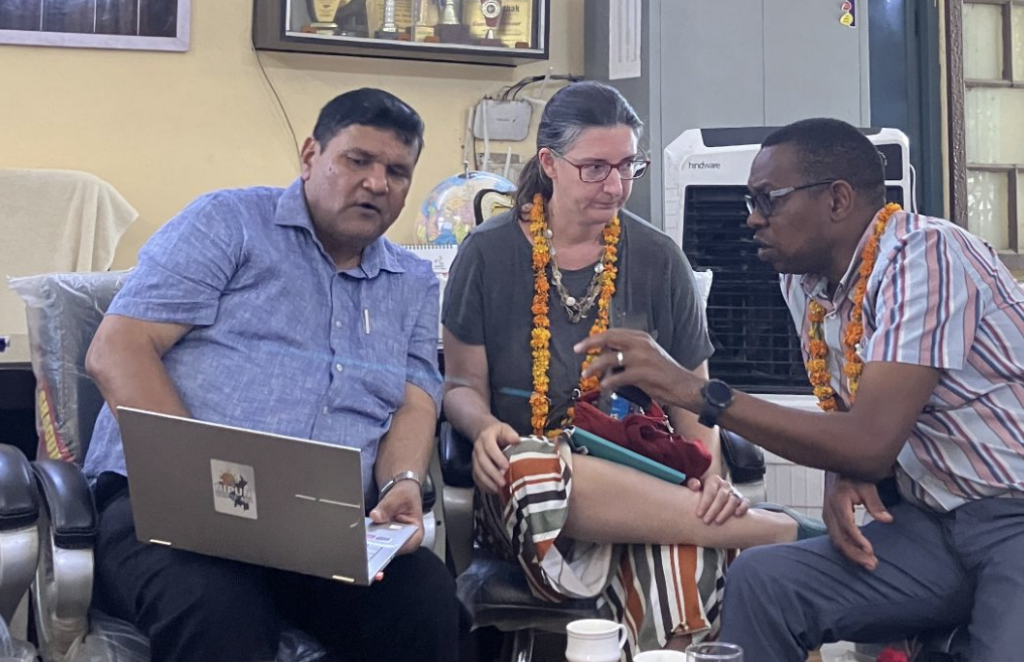
Kenya/Brazil learning from an Indian state leader, August 2024.
5. Build coalitions so reform campaigns persist through turbulence.
Government reforms are extremely difficult. From a surprise election that removes a leader you’ve spent years cultivating, to an ally retiring, political Cabinet reshuffles, or budget cuts – the challenges are endless. One leader or organisation cannot change a system alone.
Successful Brazilian reforms show us that a movement of reform champions inside and outside government, pushing aligned messages and strengthening government capacity, can achieve the holy grail of large-scale policy reform. For example, Movimento pela Base, a coalition supported by Lemann Foundation, successfully changed national curriculum standards. Through learning trips to the US, relationship-building, and facilitated policy co-creation, the coalition grew over seventy allies across civil society, academia, government and political parties – a critical mass powerful enough to succeed through intense opposition and crises (such as a Presidential impeachment).
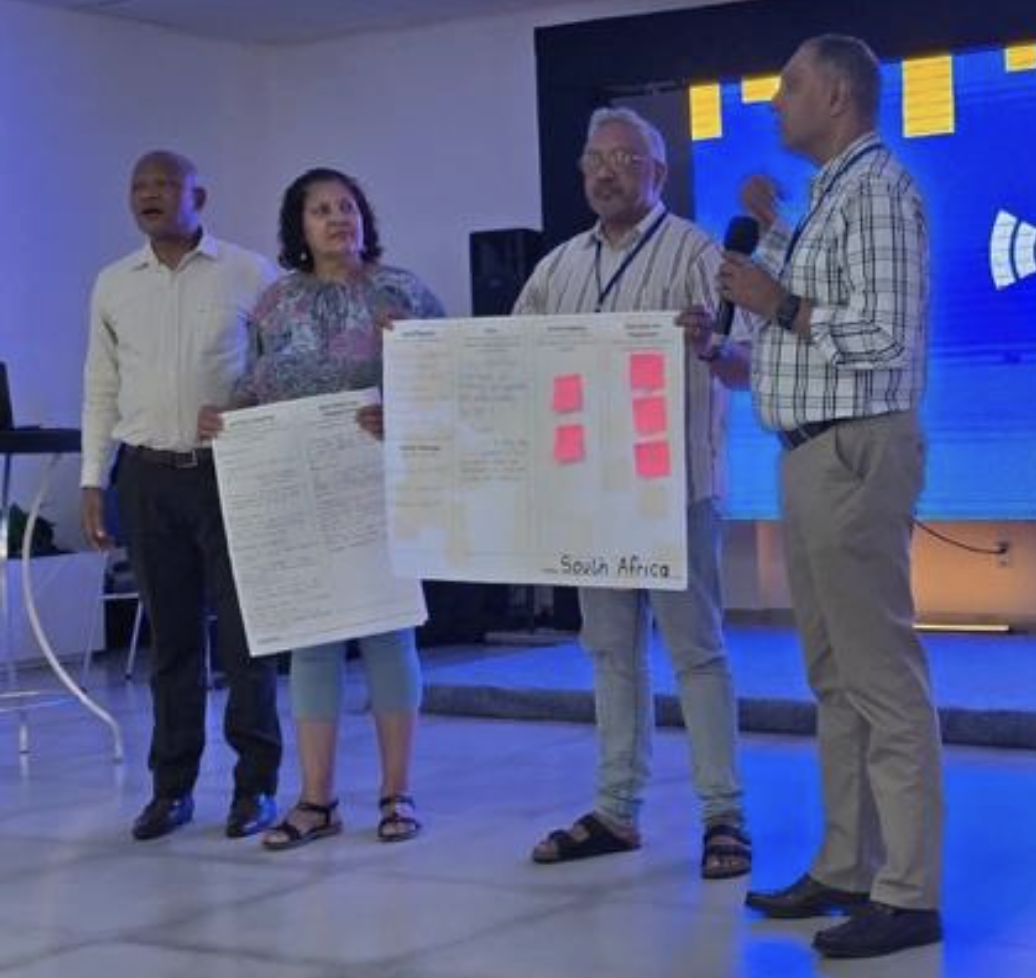
Four South African provinces presenting a joint action plan on assessments and accountability.
Back home, sub-national entities compete with each other for financial resources and prestige, but our Brazil immersion created an environment where country-mates started to see each other as part of a coalition with common goals. Three Indian states shared knowledge about what works, four South African provinces identified assessments as a common interest area, and Kenyan leaders of diverse stakeholders developed a national vision for numeracy reform. These within-country relationships and sense of collective mission keep reform champions going when they face the inevitable obstacles of navigating complex government systems.
Though relatively few leaders went to Brazil, when they returned home, they mobilised many more to be part of their reform coalitions. For example, Bertram Loriston, Deputy Director General in South Africa’s Western Cape province, worked quickly post-trip to insist that his teammates solve implementation challenges. In post-trip meetings, when their colleagues complain or don’t think something can be done, South African Lighthouse champions say, “We are trying to be Sobral here. No excuses.”
We’ve overcome many frustrations this year. This work is NOT easy. But we are confident that energised and motivated government champions, backed by in-country technical advisors with world-class government partnerships skills, will ignite learning gains in India, Brazil, South Africa and Kenya by 2035. We’re excited to see what emerges as we continue to test and learn together over the next decade.
Sustained, large-scale education reform takes hold when domestic government actors – especially middle-tier leaders – are supported as champions of change. The experiences from Lighthouse show that locally embedded institutions, peer-driven motivation, and coalition-building can accelerate existing reform efforts. These approaches point to a more durable path for advancing foundational learning by working through, and strengthening, the systems that ultimately drive change.
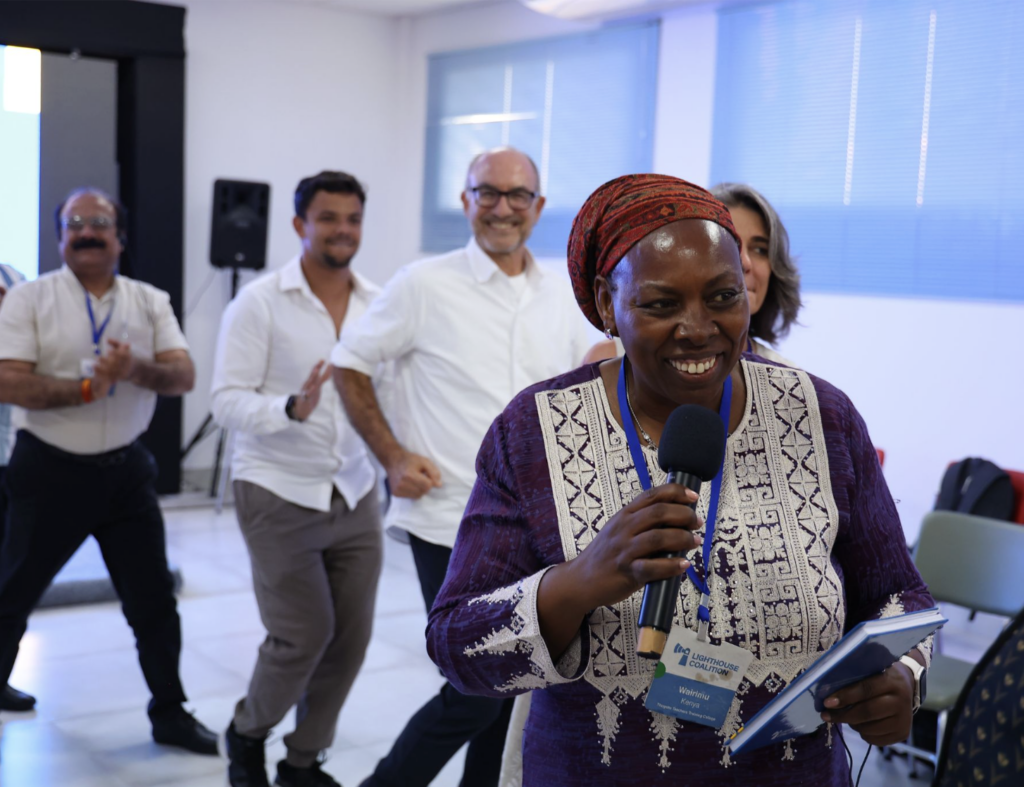
Leader from Kenya’s Directorate of Teacher Education, in Brazil
About the co-authors
Thanks to our Lighthouse Coalition partners and co-authors:
Kat Pattillo is Director of Lighthouse Coalition at Global Schools Forum.
Anna Penido is Executive Director of Centro Lemann in Brazil.
Kavita Rajagopalan is Director at Global Schools Forum.
Nwabisa Makaluza is Program Director at Binding Constraints Lab in South Africa.
Saurabh Chopra is Senior Director at Central Square Foundation in India.
Virginia Ngindiru is Director, Foundational Skills at Mizizi Elimu Afrika in Kenya.
Victoria Egbetayo is Senior Program Officer, Policy & Advocacy at the Gates Foundation.
Share this article