
 Inclusive Education
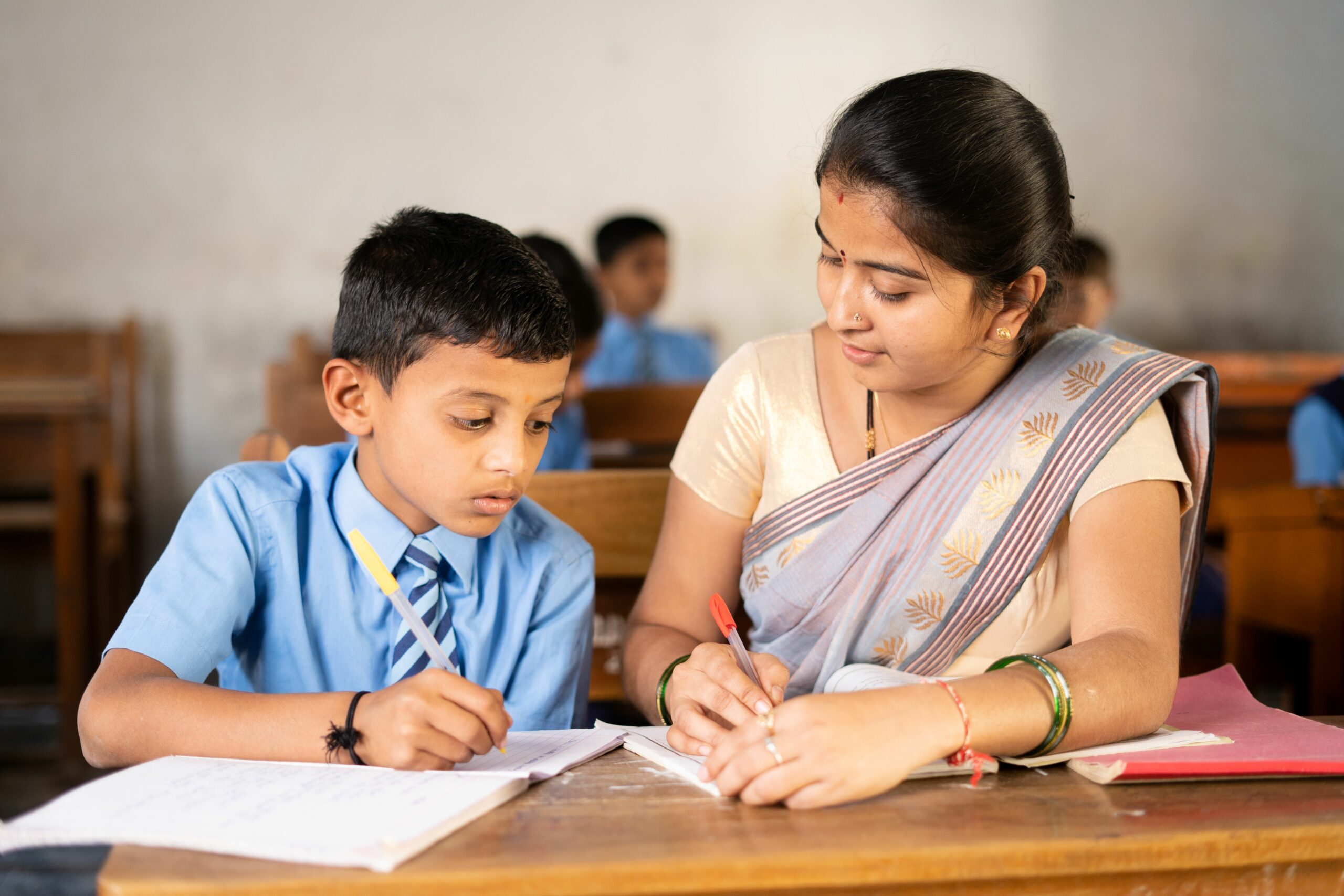
Every year on 21 February, the world comes together to observe International Mother Language Day—a day to celebrate the rich linguistic tapestry that children bring to our classrooms. But for millions of children across the globe, this celebration stands in stark contrast to their daily reality: they are forced to learn in a language they do not understand, taught by teachers who may themselves be navigating unfamiliar linguistic terrain.
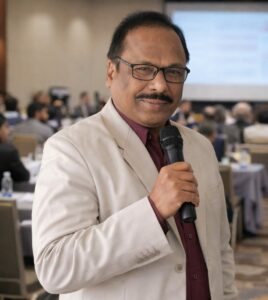 This year, Global Schools Forum (GSF) marked the occasion by spotlighting the work of the Language and Learning Foundation (LLF), an organisation transforming foundational learning in India by placing mother tongues at the heart of the classroom. We were honoured to host an intimate 75-minute dialogue with Dr. Mahendra Kumar Mishra—UNESCO International Mother Language Award winner (2023), Padma Shri awardee (2026), folklorist, and a key leader at LLF.
Dr. Mishra’s journey is exceptional. Born in western Odisha, he grew up in close proximity to indigenous communities, where early exposure to storytelling, ritual narratives, and oral performance traditions shaped his scholarly trajectory. For over four decades, he has conducted rigorous fieldwork among tribal communities, particularly the Saora, Kondh, and other indigenous groups, recording long narrative cycles, ritual chants, myths of origin, folktales, and indigenous knowledge systems. His corpus includes more than 25 books bridging folklore studies, linguistics, anthropology, and education.
This blog captures the essence of that dialogue; a conversation that moved beyond policy and symbolism to explore the very soul of learning.
Personal journey
Q: You grew up in western Odisha, close to tribal communities. What languages did you grow up speaking?
Dr. Mishra: The local language in my region is called Sambalpuri or Koshli – it is different from standard Odia. So even I, growing up, faced difficulties in comprehending the standard Odia language used in primary school books. My parents were immensely helpful in making me proficient in the Odia language and literacy, telling me Odia stories and singing songs to develop my taste for learning Odia. I started reading Odia poems and stories in Class III with meaning and comprehension, and began reading children’s literature in 1963-65. I loved stories, and our teachers were particularly delightful storytellers, sharing stories in the classroom beyond the textbooks.
Q: When did you first become aware that for some children, the language of school was not the language of home?
Dr. Mishra: When I entered Class III, teachers were teaching in a language not understood by many children. I realised that my classmates from tribal communities found it difficult to speak, read, write, and understand the textbook language that I could easily comprehend. I also witnessed how teachers would scold, test, and insult them for not being able to speak the school language. Since they could not read, they could not understand—and speaking the textbook language was a profound challenge, resulting in high dropouts and school failure.
Q: Was there a particular moment that made you realise language is about identity and justice, not just communication?
Dr. Mishra: Yes. I remember a teacher showing a picture of a bird and an egg, asking the children to name them. The tribal children replied in their mother tongue: antid for the bird and aadresim for the egg. The teacher became angry and said, “You fool! You should not use your tribal language. You should say chadhei for bird and andda for egg.” In that moment, the students’ self-image was denigrated. They were insulted. And they began to develop a sense of self-hate for their own language.
That experience stayed with me. It was an insult, an injustice, and it questioned the very identity of those students. After all, what was the fault of the students? Speaking their language of mind and heart?
Q: You have engaged with practitioners from Pakistan, Bangladesh, Nepal, and beyond. Is this challenge unique to India?
Dr. Mishra: No, it is a common thread all over the world. People are multilingual by default, but the monolingual ideology of schools and official languages forces students into monolingual boxes. I have come across hundreds of mother tongues across South Asian countries, yet children are taught in only one language—following a “one country, one language” theory that ignores the linguistic diversity of the classroom. South Asia is a unique example of multilingualism, with thousands of languages spoken across borders. Yet the colonial legacy of monolingual policy persists. In India, 24 scheduled languages are used as media of instruction, covering about 60% of the population—meaning around 40% of children are deprived of meaningful learning in their mother tongue.
School-community divide
Q: You once shared a powerful story of a little girl who said she would only stay in school if her mother could join. What does that tell us about the divide between schools and communities?
Dr. Mishra: This happened just last month. A mother brought her child to school. The child said to her teacher, Bijayini, “If my mother is enrolled in the school, then I will come to school regularly.” The teacher replied, “We will provide you mid-day meal and egg.” The child said, “Unless my mother is enrolled and always with me, I will not eat any mid-day meal.” When her mother finally had to leave, the child came to Bijayini, slept on her lap, and said, “I feel safe with you.”
This story reveals how a child’s world is entirely different from the school environment. It shows how school is detached from the socio-emotional bonding children have with their families. We must ask: How can our school become a home of enjoyment, songs, dance, stories, and literacy—so that a child never feels she is missing her parents?
LLF’s approach: Authentic community engagement
Q: How does LLF approach community engagement differently from programmes that use stories and songs only “symbolically”?
Dr. Mishra: For us, community funds of knowledge are the key to multilingual education. We document the oral tradition and cultural materials of the community and use them directly in the school curriculum. Every LLF big book and storybook is drawn exclusively from community knowledge, with minimal editing to preserve children’s speech patterns and contexts. The stories are connected to children’s everyday lives—the birds, animals, and nature they see around them. This is not symbolic; it is the foundation of learning.
Q: What are the concrete first steps for an organisation wanting to bridge the school-community gap authentically?
Dr. Mishra: Acquisition of oral language in home is the foundation of ‘Oral language development in the child’s home language – both at home and in school – is the first step. Teachers must be oriented to speak children’s home language, to read big books with pictures, to tell stories following the speech pattern of children. This breaks the silence of children. They begin to speak more than the teachers because they find their own experiences reflected in the stories. They speak when then they listen to their language in textbooks and spoken by the teachers. Their environment becomes the curriculum.
Storytelling Festivals and School Museums
Q: Can you describe a Storytelling Festival or a School Museum? What makes them more powerful than a worksheet?
Dr. Mishra: These are two milestones for school-community linkages. In a Storytelling Festival, the community and parents contribute oral stories and songs. Students listen to storytellers directly from the community. They listen, they write, they draw pictures, they elaborate before an audience. Children draw better pictures of the story than the adults and express their imagination, along with writing stories. They enjoy the story and unleash their creativity.
A School Museum is a room in the school where all the handicrafts of home, kitchen, garden, and agricultural fields are stored – artifacts of everyday use. Each object has a direct connection to children’s experience. The more the artifacts in the museum, the more children are exposed to foundational literacy through object-word association. They learn by connecting words to things they have used, bearing experiences with their parents connected to their memory of using the items of culture. A teacher burst into tears when one child narrated how his mother was using a utensil that was thrown out in garbage, but when he was asked to bring an item of material culture, he brought this and when asked how his mother was cooking food in the utensil and fed him to bring him us, his eyes were filled with tears, and he was speechless.
Q: You distinguished between the beauty of a story and a test on a story. How do we preserve joy while building literacy skills?
Dr. Mishra: The beauty of a story is the main product for children; the text of the story is a by-product for literacy. But for many teachers, literacy tests become the main product, and the story becomes the by-product. This is backwards. When we turn every story into an assessment, the joy disappears, and with it, the child’s natural engagement. We must trust that joy and learning are not opposed – they are partners.
Honouring mother tongue while accessing global languages
Q: This is the question that comes up everywhere – from Senegal to India. How do we honour a child’s mother tongue while also equipping them with global languages like English?
Dr. Mishra: A child’s first language shapes their cognition. It is their language of thought, and their language of speech that should be the basis of learning and literacy. If we ignore this, they will lose their interest. If we focus only on the language of scripts – then they are disconnected from their experience. Writing and reading are new challenges to children. So they should be taught literacy through a cultural context. Once children are fluent in their language of thought, with literacy in that language, learning other languages becomes easy. We must focus on meaningful, comprehensible literacy in context. That foundation allows other languages to be acquired without fear.
Q: What does an “additive” journey look like – from home language to regional language to global language – without subject learning suffering?
Dr. Mishra: “additive multilingualism” is itself a compromise. It is a term teachers and policymakers use to ask, “How much of the child’s language can we add to the classroom?” The opposite – “subtractive multilingualism” – is the outright denial of mother tongue, using it only as tokenism. In a community, no language is additive or subtractive, it is a natural flow of thought articulated in language for a purpose of action. For us language should be as natural as children can speak. In course of time children will learn more about the critical nuances of language.
The truth is that languages are not enemies to each other. They are complementary. A child who learns in their mother tongue first does not abandon it when learning Odia or English. They build on it. The cognition developed in the home language becomes the foundation for all future learning.
Partnering with Government
Q: You have partnered with state governments in Odisha for decades. What makes an effective, lasting government partnership?
Dr. Mishra: I was fortunate to be part of the state system that started mother-tongue education for tribal children in Odisha, influenced by World Bank and Government of India guidelines. Because I was a government officer myself, I had the scope to influence policymakers and politicians. Dr. Dhir Jhingran, then Director of DPEP in the Ministry of Education, supported Odisha’s MLE programme, (currently, Founder and Executive Director of LLF) Prof. Ramakant Agnihotri, a pioneer Multilingual Education Expert provided academic support in creating tribal bilingual primers. This combination – political will, bureaucratic support, academic rigour, and community knowledge – made it possible.
But it was not easy. I remember one secretary telling me I was “unnecessarily” focusing on tribal languages. I responded: “If you say these children understand Odia, can you understand their language?” He could not. I gave him a sentence in Saura language—Aboi Tulaban Singan dakuli—and asked what it meant. He said, “I cannot understand this.” The meaning of the sentence was, ‘There was a lion in a forest.’ I explained: “This is the language of 300,000 children in the State. If you cannot understand their language, how can they understand yours?” That moment of realisation, combined with the Chief Minister’s political will, opened the door for MLE in 10 tribal languages of Odisha.

Throughout the conversation, several profound themes emerged that extend far beyond the Indian context:
- School-community divide is real and harmful: Dr. Mishra’s story of the little girl who wanted her mother enrolled in school is a powerful metaphor. Children do not experience school and home as separate worlds – they carry one into the other. When schools refuse to acknowledge this, they create alienation from the very first day.
- Joy is not optional, it is foundational: The contrast between a Storytelling Festival and a standardised test captures something essential. Joyful learning is not a luxury to be added after “real” learning happens. It is the real learning. When children are engaged, when they see themselves reflected in the curriculum, they learn not just faster but deeper.
- Symbolic inclusion is not enough: Many well-intentioned programmes take stories and songs from communities but strip them of meaning, turning them into decorative elements in textbooks. Authentic inclusion means co-creating curriculum with communities, not extracting or modifying from them.
- Multilingualism is the way forward: The tension between mother tongues and global languages is real, but it is not zero-sum. Children can and should become multilingual. The key is sequence and respect: build a strong foundation in the home language first, then add others. This is not delay, rather it is the most efficient path to genuine multilingualism.
- Systems change requires multiple levers: Dr. Mishra’s description of the four forces – political will, bureaucratic will, academic will, and community will – is an examplar in systems thinking. Lasting change happens when all four align. And sometimes, as in his encounter with those in charge – change begins with a single moment of honest confrontation.
- The educator must first be a learner: Perhaps the most radical insight: Before we can teach children, we must learn from their communities. The village is not empty of knowledge – it is full of it. The farmer, the storyteller, the grandmother—they are all educators. Our role is to listen first, then teach.
Closing thought: “Go to the People”
When asked for one piece of advice every educator could act on tomorrow, Dr. Mishra’s response was simple and profound:
“Go to the people, learn from the people, and teach the people.” He elaborated:
When there is no school in a village, still there is learning. The village is full of potential - anthropology, sociology, linguistics, literature, mathematics, natural science. Everything is there, balanced in cultural practice. This is productive knowledge. Our knowledge from textbooks is secondary. Their productive knowledge is primary. If you want to do anything in education, go to the community. Learn from them. Unlearn your bookish knowledge. Connect with their practice knowledge. And then teach.
Dr. Mahendra Kumar Mishra
Watch the full dialogue
We invite you to watch the complete dialogue here, where Dr. Mishra shares many more stories, responds to audience questions, and explores these themes in greater depth.
Explore LLF’s resources
The Language and Learning Foundation has developed extensive resources for multilingual education. We encourage you to explore:
Share this article