




Impact at Scale Labs: Acceleration to Fluency seeks to transform education systems by working with promising innovators to identify and validate a small set of practical, classroom‑based solutions that can move children further, faster toward fluent reading by the end of Grade 3, and that can be implemented and scaled with governments in Sub‑Saharan Africa.

Strategic Priority

Knowledge Accelerator

Funding Catalyst

Partnership Builder

Who will Acceleration to Fluency support?

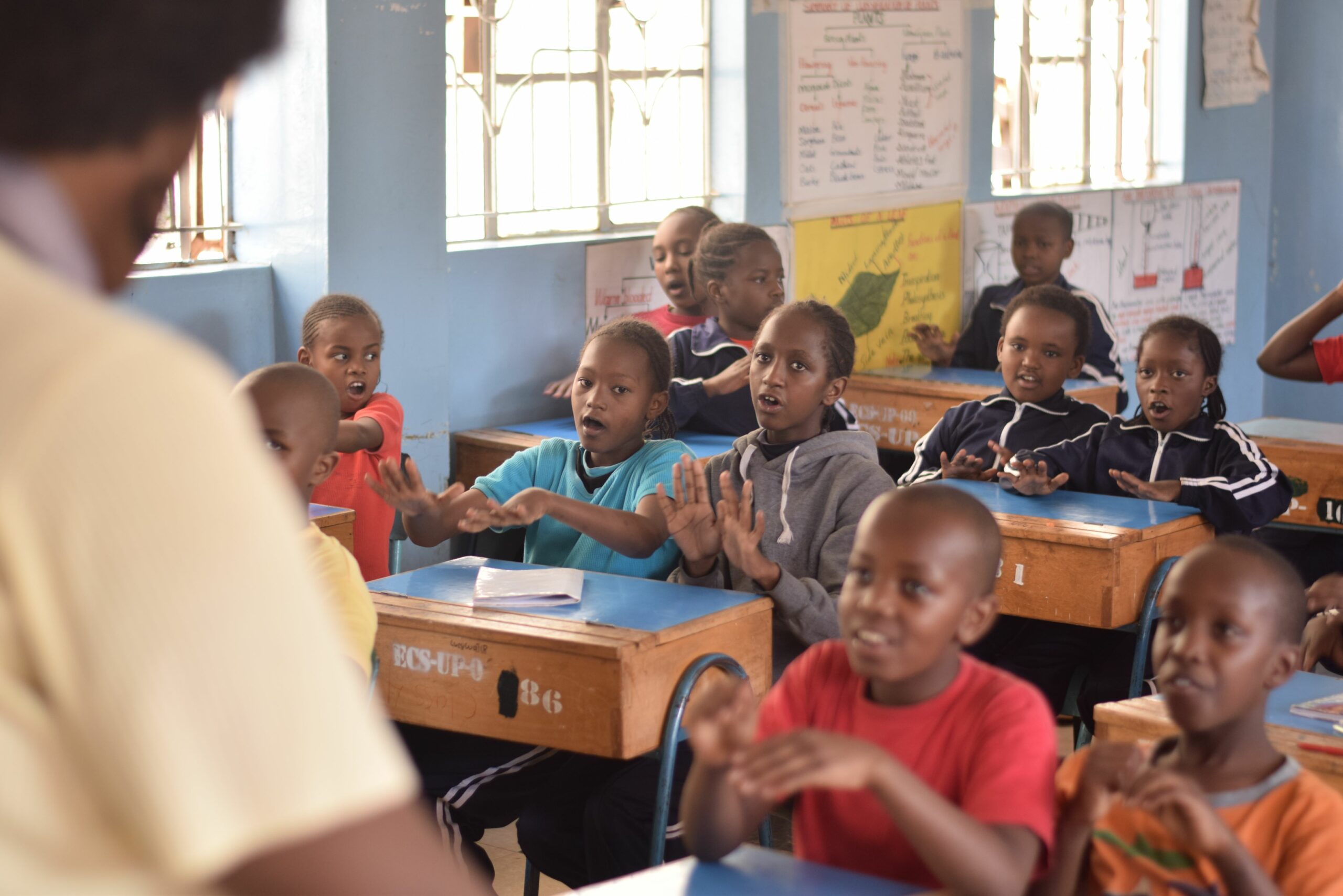
This programme aims to identify instructional practices that benefit Grade 1-3 children in public schools in sub-Saharan Africa. We are seeking classroom-based instructional practices that can be implemented in African public-school classrooms and have the potential to be affordable within government systems. They can be delivered in any language relevant to the setting. We are particularly interested in approaches that  incorporate specific instructional practices with high potential to accelerate fluency at scale. These practices may include: 

  • Phonics instruction 
  • Reading practice 
  • Spelling or writing instruction 
  • Literacy-based language instruction 
  • Assessment-informed instruction 
  • Other literacy solution with strong research-based rationale 

We are also looking to uncover innovative AI-enabled solutions that are used to deliver one or more of these instructional practices. 

Acceleration to Fluency will support locally-led organisations and Africa-based researchers with:

Grant funding

Selected organisations and researchers will receive up to US$350,000 to implement and evaluate their fluency solution.

Tailored coaching and technical support

Grantees will receive 27 months of tailor-made support to codify, test and refine their fluency solution.

Access to ecosystem partners and peers:

Grantees will be given the opportunity to engage with the global GSF member base and wider network to share evidence and encourage replication of impactful solutions.

Learn more about the problem Impact at Scale Labs: Acceleration to Fluency is addressing

Image

Reading fluency 

If 90% of children could read by age 10, worldwide GDP per capita would be 27% higher by 2050. Hundreds of millions more would complete primary school, more young people would access stable, meaningful employment, and millions of child deaths could be averted. Learning to read now will have a transformative impact for generations of children. 

At the moment, even the best programmes leave too many children short of reading proficiency. There is an urgent need for innovations that move more children further and faster towards skilled reading. Building foundational skills early will enable students to read and understand the texts they encounter later in school, unlocking the academic, economic, and civic benefits education is meant to deliver. 

Image

Geographic Scope 

English, French, and Portuguese-speaking, locally-led African organisations implementing literacy programmes are encouraged to apply as single organisations or as a consortium. We are prioritising solutions being delivered in Côte d’Ivoire, Ethiopia, Ghana, Kenya, Mozambique, Nigeria, Senegal, South Africa, or Tanzania, but will consider compelling solutions from other countries in sub-Saharan Africa.

Image

Tier 1: Demonstration

Scale & scope: Targeting 80–120 schools
Focus: Supporting solutions that are ready to be tested at scale. Funding covers research and implementation across a wide range of schools and diverse contexts, with the goal of demonstrating effectiveness under real-world conditions.
Budget: Up to $350,000 over two years

Tier 2: Proof of Concept

Scale & scope: Targeting 50–80 schools
Focus: Supporting solutions at an earlier stage of development. Funding covers research and implementation at a smaller scale, with a focus on isolating specific components of the solution that could drive impact.
Budget: Up to $200,000 over two years

Image

Application process

Eligible organisations and researchers are invited to submit an Expression of Interest and will receive written feedback. Select applicants will be invited to send a full proposal, followed by interviews and final selection.

  • Expression of Interest opens: 3 March 2026
  • Expression of Interest submission deadline: 23 March 2026
  • Invitation to submit full proposals: 30 March 2026
  • Full Proposal submission deadline: 20 April 2026
  • Interviews and selection: May 2026

Downloads

Download the Application pack and Expression of Interest form below in English, French, and Portuguese

Document icon

Application Pack - English - Acceleration to Fluency

Document PDF
Download
Document icon

Expression of Interest - English - Acceleration To Fluency

Document Word
Download
Document icon

Dossier de Candidature - Français - Acceleration to Fluency

Document PDF
Download
Document icon

Manifestation d'Intérêt - Français - Acceleration to Fluency

Document Word
Download
Document icon

Guia de aplicação - Português - Acceleration to Fluency

Document PDF
Download
Document icon

Manifestação de Interesse - Português - Acceleration to Fluency

Document Word
Download

Submit your Expression of Interest on the portal by 23 March 2026

event-type-icon

GSF Event

Impact at Scale Labs: Acceleration to Fluency application webinar

Join this live information session to learn more about the application process for the Impact at Scale Labs: Acceleration to...

event-date-icon

Tuesday 10 March 2026

event-time-icon

7:30am EST

12:30pm UK

3:30pm EAT

6:00pm IST

location-icon

Online

View all events

Impact at Scale Labs testimonials

Because of the Impact at Scale Lab, we have stronger thinking and alignment around impact measurement. Engagements around MEL, Theory of Change, and evidence use sharpened our approach to measuring outcomes—not only for children, but also for caregivers and employers. This has opened pathways for future collaboration with research partners and policymakers interested in evidence-informed childcare models.

Prisca Muyodi

Nawirika Foundation

Our organisations have dedicated time to delve into crucial topics like building partnerships and strengthening evidence for scale. Practitioners and thought leaders from the eduction community— including Ruth Kagia (GPE), Ben Piper (Gates Foundation), and Samuel Kembou (Jacobs Foundation)—shared their insights and fresh perspective. Their contributions sparked meaningful discussions on evidence-based methods for scaling FLN initiatives.

Craig Paxton

Axium Education

The Lab’s Scale Readiness framework has been very helpful in providing structure and planning for Sabre as we develop our work with low-fee private schools in Ghana. The framework gives us a pathway to understand the market and viability in terms of low-fee private schools.

Susan Place-Everhart

Sabre Education