


 Climate and Education
At the GSF Annual Meet, educators, NGOs, and policy influencers united around an urgent truth: climate change is disrupting education, and education must be at the heart of the solution.
The final plenary of the GSF Annual Meet began not with a speech, but with a shock. The question was simple: “How many students had their learning disrupted by climate events in 2024?” The answer was staggering: 242 million. This number, revealed through an interactive quiz, set the tone for a powerful session dedicated to building education systems that can weather the storm of the climate crisis.
The data painted a clear picture: from heatwaves in South Asia displacing 171 million students to the fact that only 39% of countries have robust climate education policies. The message was undeniable—climate disruption is no longer a distant environmental issue; it is a pressing education emergency.

From receiving shocks to leading response
The session, moderated by Shweta Bahri of Earth Warriors, framed a dual role for education. It is a receiver of climate shocks, with schools closing and inequalities deepening with every flood and drought. But more importantly, it can be a powerful responder, transforming into a resilience hub that protects learning and equips communities to adapt.
Our panellists, working on the front lines, brought this concept to life:
- Emma Gremley and Jeffrey Dow (International Rescue Committee) shared how parametric insurance in Kenya provides cash and remote lessons via WhatsApp to families during droughts, while anticipatory action in Bangladesh uses forecasting to protect refugee education before a cyclone hits.
- Joel Elphas (TECEC) demonstrated the power of early education in Tanzania, where children like 5-year-old Neema are becoming “Climate Defenders,” creating ripple effects that inspire their families and communities to compost, conserve water, and plant trees.
- Jenny Groot (PEAS) highlighted the systemic approach needed in rural Africa, from integrating climate into the curriculum to building resilient school infrastructure that serves as a model for the entire community. She also highlighted a core tension: the need for cost-effective solutions that do not force impossible choices between resilience and resources.
A world of shared challenges, a universe of local solutions
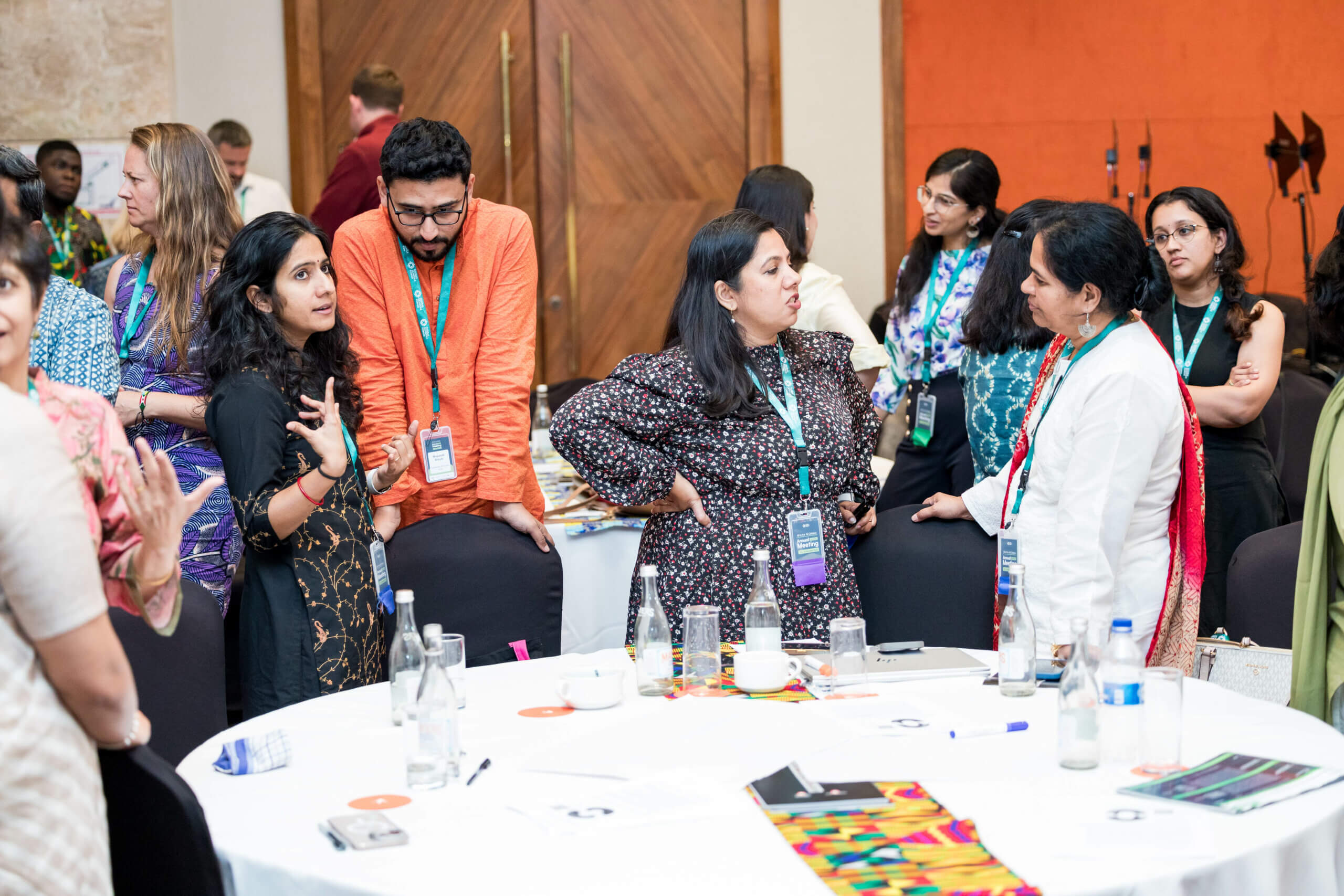
To truly globalise the conversation, the room became a living map. Participants moved to the region their heart belongs to and shared their realities. The stories were different, but the theme was the same:
- A participant from South Asia described roads and schools washed away by floods, with children missing months of education.
- A voice from East Africa explained how extreme heat has forced schools to hold classes in the early morning and late evening.
- A representative from Latin America urged for more inclusion in global dialogues, noting that their struggles with fires and floods are often overlooked.
This exercise revealed a critical gap: while communities often have the knowledge and can predict local climate impacts, their voices are frequently absent from policy rooms. The solutions exist, but they are isolated.
A call for a unified voice
The breakout discussions crystallised our urgent needs and opportunities. We must bridge the critical gap for climate finance and policy to systematically recognise these impacts on education, ensuring adequate research, mainstream attention, and funding to build resilience.
Specifically:
- Instead of one-size-fits-all mandates, we need localised policies and plans, such as climate-responsive school calendars, that allow schools to adapt to climate challenges
- We need to amplify community voice and integrate local knowledge into planning
- We need to bridge the gap between tactical, on-the-ground adaptations and the strategic, long-term fight against the root causes of climate change.
- We need low-cost, scalable game-changers, like affordable renewable energy for schools.
- We need inclusive and contextual climate education that inspires nature-based solutions, improves local community resilience, and accounts for climate justice and green careers.
No single organisation can do this alone. The scale of the challenge demands that we learn from each other and create a unified voice.
This is why we are excited to launch a Community of practice for Climate-resilient and climate-conscious education. This will be a space for school leaders, NGOs, and policy influencers to share strategies, co-create solutions, and advocate collectively to ensure education has the seat it deserves at the climate policy table.
Join Us
The conversation has started, but it is far from over. We invite you to be part of building this vital community.
Share your insights, needs, and ideas by filling out our survey here
Share this article